State Capital Dominates Global Mining as Sovereign Wealth Replaces Private Investment
The global mining industry is experiencing a profound structural transformation as sovereign wealth funds and state sponsored entities rapidly displace conventional private equity. Driven by the urgent need to secure critical mineral supply chains, governments are deploying unprecedented volumes of patient capital into tier one resource projects globally. From Middle Eastern petrodollars, acquiring massive copper reserves in Africa, to the United States government directly underwriting domestic antimony production, the cost of capital is now dictated by geopolitical strategy rather than pure free market economics. For mining professionals, navigating this new financial landscape is essential for future project viability.
The financial architecture of the global mining sector is undergoing a permanent realignment. As the world accelerates its transition towards renewable energy networks and electrified transport, the sheer volume of critical minerals required has exposed a fatal flaw in traditional capital markets.
Conventional private equity and institutional investors appear to be structurally incapable of funding the next generation of global mineral extraction. In their place, sovereign wealth funds, state owned enterprises and government export credit agencies are deploying hundreds of billions of dollars to secure strategic resource pipelines.
For executives, geologists and financiers, understanding this sovereign shift is the key to successfully financing the mega projects of tomorrow.
The Failure of Conventional Capital in Critical Minerals

To understand why this sovereign shift is accelerating rapidly, mining professionals must first analyse the fundamental mechanics of conventional capital allocation.
Traditional private equity firms and institutional debt providers operate under stringent fiduciary mandates with rigid time horizons. Institutional equity funds typically demand high internal rates of return and rapid dividend yields to satisfy their immediate shareholders.
Private equity firms generally operate on strict five-to-seven-year investment cycles which require clear and rapid exit strategies. Furthermore, these conventional allocators are increasingly bound by inflexible environmental social and governance policies that strictly limit their exposure to frontier mining jurisdictions.
This conventional financial framework is fundamentally incompatible with the geological and engineering reality of modern mineral extraction. Global ore grades for base metals are declining relentlessly. Consequently, maintaining flat production profiles requires moving massive volumes of material, which demands immense upfront capital expenditure.
Discovering, permitting and constructing a tier one copper or rare earth concentrator now routinely takes between ten and fifteen years.
Commercial banks are highly reluctant to carry construction risk over such extended timelines - especially in an era of persistent macroeconomic inflation and volatile commodity pricing.
When conventional financiers do allocate capital to frontier mining jurisdictions, they often demand internal rates of return exceeding 20-percent to offset perceived geopolitical risks. To achieve these exorbitant returns, mining operators are forced to aggressively high grade their orebodies.
This practice extracts only the richest ore early in the mine plan, which permanently sterilises massive volumes of lower grade material and destroys long-term resource value.
The Sovereign Solution and the Cost of Capital Disconnect

This vast funding gap has catalysed the rise of direct state investment. Sovereign wealth funds and national export credit agencies possess balance sheets capable of absorbing massive infrastructure risks. Crucially, this sovereign capital is incredibly patient. These state entities are not driven by quarterly corporate earnings reports or immediate dividend distributions. Their primary mandate is total strategic resource security.
By securing guaranteed physical offtake of critical minerals like copper, lithium and rare earths these nations protect their domestic manufacturing sectors from global supply shocks. Because their primary objective is acquiring physical metal rather than generating rapid financial yield, sovereign funds can deploy capital with return expectations in the low single digits.
This dramatically lowers the hurdle rate for metallurgical feasibility studies. Mine engineers can therefore design massive bulk tonnage extraction plans that process lower grade ores over a forty or fifty-year mine life. By eliminating the aggressive principal repayment schedules demanded by conventional commercial banks, sovereign funds allow operational teams to focus entirely on safe and efficient production.
Middle Eastern Petrodollars Target Base Metals
The Middle East has emerged as the most aggressive new participant in global mining finance – the Iran war notwithstanding. Nations seeking to diversify their sovereign revenues away from fossil fuels are deploying vast accumulated oil wealth to secure the base metals required for the global energy transition.
Saudi Arabia established a definitive benchmark for this strategy through the creation of Manara Minerals. Formed as a joint venture between the Saudi Public Investment Fund and the national mining champion, Maaden, the entity holds a powerful mandate to secure critical minerals globally. Manara executed a watershed transaction by acquiring a 10-percent ownership stake in Vale Base Metals for 2.5 billion dollars. Vale Base Metals operates some of the most significant copper and nickel assets across Brazil, Canada and Indonesia. Following this massive capital injection, Manara is now leveraging its geopolitical momentum to actively target minority stakes across the prolific African copper belt.
The United Arab Emirates is pursuing a similarly aggressive acquisition strategy. Operating out of Abu Dhabi the International Resource Holding company executed a transformative deal by acquiring a 51-percent controlling stake in Mopani Copper Mines. This legacy asset is located in the Copperbelt Province of Zambia.
By injecting hundreds of millions of dollars to revitalise the historical underground mining complex, the United Arab Emirates completely outmanoeuvred traditional Western private equity bidders.
This transaction secured a vital node of global copper production for Abu Dhabi while providing Zambia with the patient capital required to extend the operation for decades.
The United States Reengineers Domestic Supply Chains
While Middle Eastern capital flows heavily into emerging markets, the United States is weaponising its federal balance sheet to reshore critical mineral production. The Export Import Bank of the United States has officially transitioned from a traditional trade facilitator into a dominant tier one project financier.
The federal government recognises that relying entirely on foreign imports for military grade materials and battery metals presents an unacceptable national security risk.
This aggressive industrial policy reached a historic milestone in late March 2026 when the Export Import Bank advanced a proposed 2.7-billion-dollar senior secured, long term loan to Perpetua Resources Corporation. Perpetua Resources trades on the Nasdaq stock exchange under the ticker PPTA. The company is developing the massive Stibnite Gold Project located in the remote mountains of Idaho in the United States.
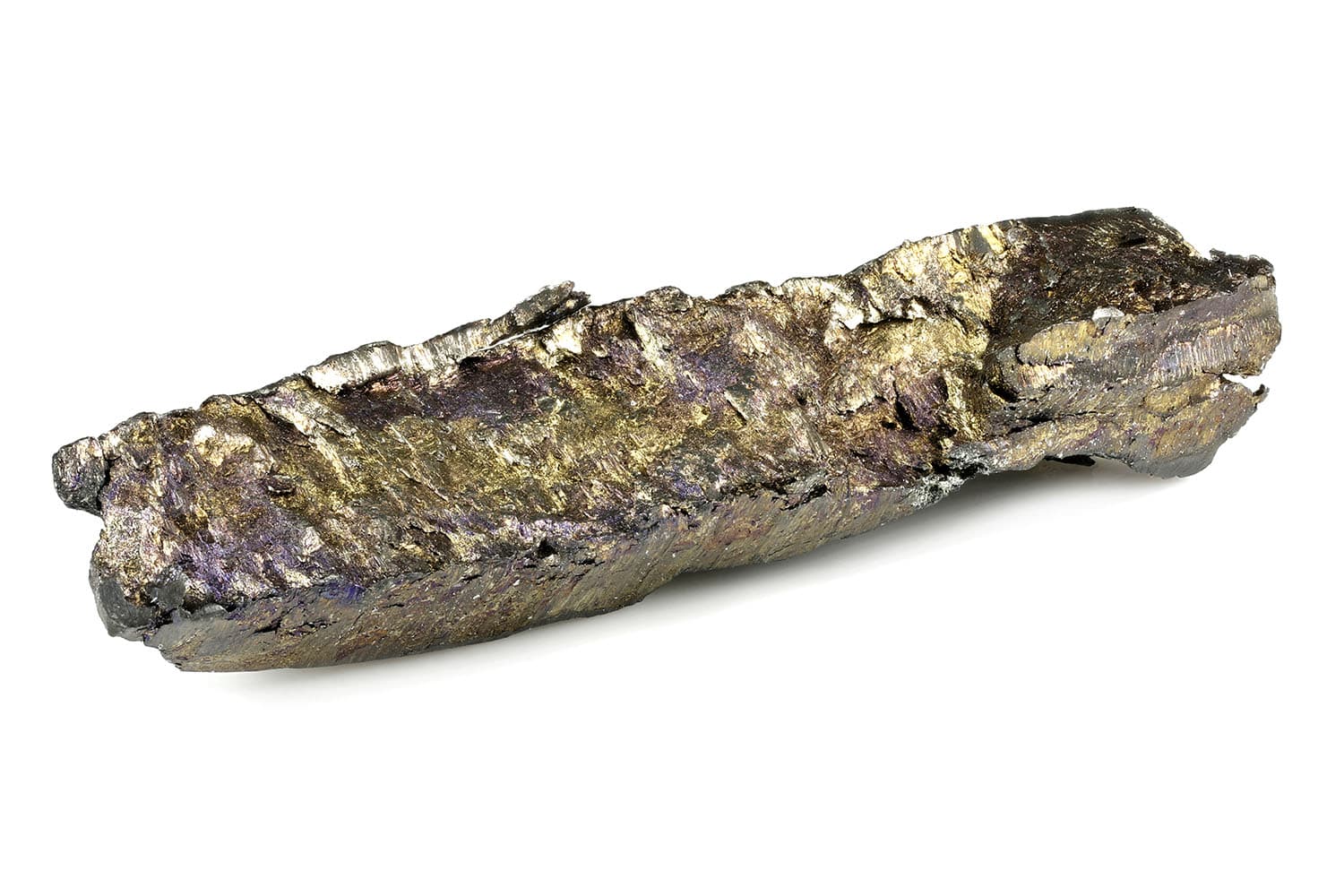
Stibnite is an exceptional geological anomaly containing both rich gold intercepts and massive reserves of antimony. Antimony is a highly strategic commodity essential for manufacturing munitions, night vision goggles and grid scale liquid metal batteries.
The sheer scale of the 2.7-billion-dollar direct government loan ensures that Perpetua Resources can fully fund infrastructure construction without suffering the crippling shareholder dilution typically required to build a multibillion dollar mine.
By bypassing commercial banks entirely, the United States government is directly shielding its domestic defence manufacturers from global antimony supply constraints.
Australia Shields the Rare Earth Frontier
The Australian government is deploying sovereign capital to aggressively break monopolistic control over global rare earth element supply chains. Rare earths such as neodymium and praseodymium are the irreplaceable magnetic components within electric vehicle motors and offshore wind turbines.
Arafura Rare Earths Limited serves as the prime example of this Australian sovereign strategy. Trading on the Australian Securities Exchange under the ticker ARU the company is advancing the Nolans project. This massive critical minerals deposit is located 135 kilometres north of Alice Springs in the Northern Territory.
In the first quarter of 2026, Arafura secured a monumental funding package totalling over 920 million Australian dollars. This capital was syndicated across multiple state entities including Export Finance Australia and the National Reconstruction Fund. In a profound departure from traditional corporate grant funding, this intervention included direct government equity participation alongside highly flexible convertible debt instruments.
This sophisticated financial engineering aligns the financial success of the project directly with the Australian federal government. For a mid-cap developer like Arafura, securing nearly one billion dollars of state backed funding instantly validates the technical viability of the metallurgical flowsheet and provides total operational confidence to downstream automotive manufacturers.
Strategic Implications for Mining Professionals
The implications of this sovereign capital shift are absolute. The traditional metrics of project valuation have fundamentally changed. While ore grade, strip ratio and metallurgical recovery remain critical factors, the geopolitical alignment of a mining jurisdiction is now the ultimate arbiter of project viability.
Assets situated within allied supply chain networks can now access vast pools of preferential sovereign debt and direct equity. Projects that produce highly strategic commodities like copper, lithium, antimony and rare earths are effectively immune to the stringent yield demands of conventional private equity.
Conversely, developers operating in politically unaligned regions will face increasingly hostile commercial lending environments and exorbitant capital costs. The mining industry of 2026 is no longer a pure free market enterprise but a strategic extension of global industrial policy.
Associated companies
Vale Base MetalsPerpetua Resources Corp. (TSX:PPTA, NYSE:PPTA)Arafura Rare Earths Limited (ASX:ARU)