Congo Builds Strategic Cobalt Reserve as State Control Over Battery Metal Supply Deepens
The Democratic Republic of Congo has created a strategic cobalt reserve, giving the state a stronger hand in a market it already dominates. In a supply chain shaped by quotas, oversupply and battery demand uncertainty, the move adds a new layer of state influence to the world’s most important cobalt-producing jurisdiction.
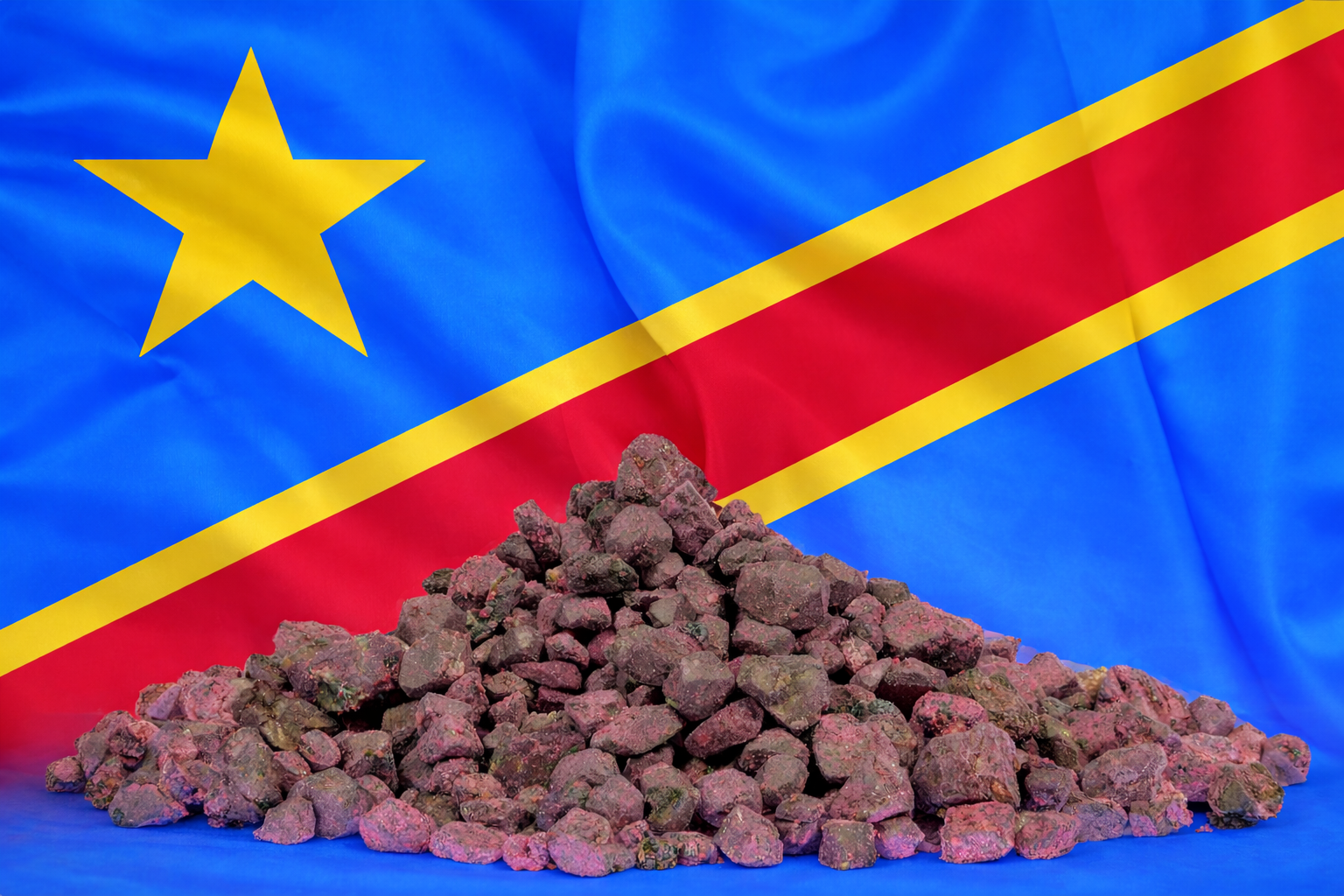
The Democratic Republic of Congo has formally created a strategic reserve for cobalt and other critical minerals, handing the market regulator ARECOMS the authority to acquire, hold and market those materials.
The measure was adopted under a cabinet decree issued on April 10 and marks a clear extension of the state’s intervention in a commodity chain where Congo already holds extraordinary weight. Last year, the country accounted for around 70 per cent of global cobalt supply.
The immediate backdrop is oversupply and price weakness. Congo had already moved to curb exports through quota management after a temporary export freeze, and the reserve now gives the state another instrument to absorb material that might otherwise weigh on the market. In the first quarter of 2026, the country exported 48,800 metric tonnes of cobalt, well below the 123,000 tonnes shipped in the same period a year earlier, before the freeze and tighter controls took hold.
What makes the move more interesting is that it changes the state’s role from regulator to potential market participant.
ARECOMS is no longer simply setting rules around volume. It now has authority to hold material and release it. In practical terms, that can affect visibility on available supply, influence buying behaviour and complicate forecasting for refiners and battery supply chain participants outside Congo.
Major international operators in Congo include Glencore (LSE:GLEN) and CMOC Group (HKSE:3993).
This new policy lands across a producing belt that already sits at the centre of global cobalt pricing and downstream battery chemistry planning. In battery metals, few jurisdictions matter as much as Congo. Fewer still are willing to assert market power this directly.