Optimising Heavy Lift Logistics: Strategic Crane Selection for Mine Site Maintenance, Expansion and Shutdowns
The scale of modern mining components has rendered the general-purpose site crane obsolete. As processing plants expand to counter declining ore grades site engineers are managing unprecedented lifting challenges. From replacing massive SAG mill gearboxes during critical turnarounds to laying kilometres of overland conveyors the demand for specialised lifting kinematics has never been higher. Understanding the distinct operational envelopes of modern telecrawlers, high-capacity all-terrain models and agile rough-terrain cranes is now a fundamental requirement for stripping out costly operational delays and safeguarding site personnel.
The physical footprint of global mining operations is expanding at an unprecedented rate. Driven by the geological reality of declining head grades concentrator plants built today require significantly larger primary crushers, flotation cells and grinding mills just to maintain flat production profiles. Consequently, the lifting logistics required to construct, maintain and eventually overhaul these facilities have become highly complex engineering exercises.
For site managers and rigging supervisors, relying on a generic lifting fleet is a fast track to schedule blowouts. Capitalising on mechanical availability requires deploying purpose-built machines tailored precisely to the ground conditions and the specific load chart requirements of the task.
Daily Maintenance: The Case for Articulated and Rough Terrain Agility
Unplanned maintenance is an inescapable reality of mineral processing. When a slurry pump fails or a conveyor drive motor burns out, recovery time is dictated by how quickly a crane can access tight, highly congested plant corridors.
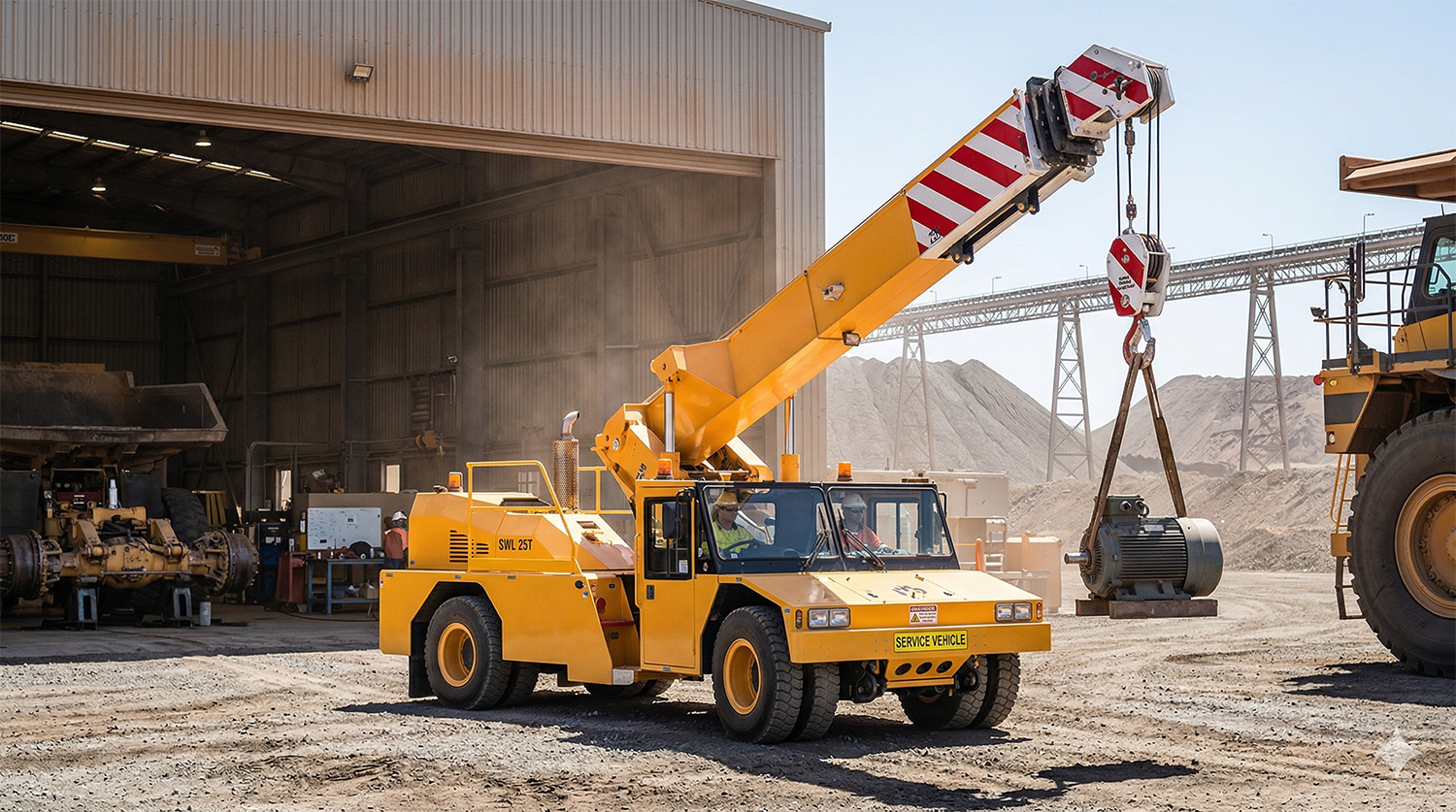
This environment is where articulated pick-and-carry cranes - best exemplified by the Franna models ubiquitous across Australasian and African mine sites - prove invaluable. Their ability to tram with a suspended load without deploying outriggers allows maintenance crews to extract heavy consumables from deep within a concentrator building and transport them directly to the workshop in a single fluid motion.
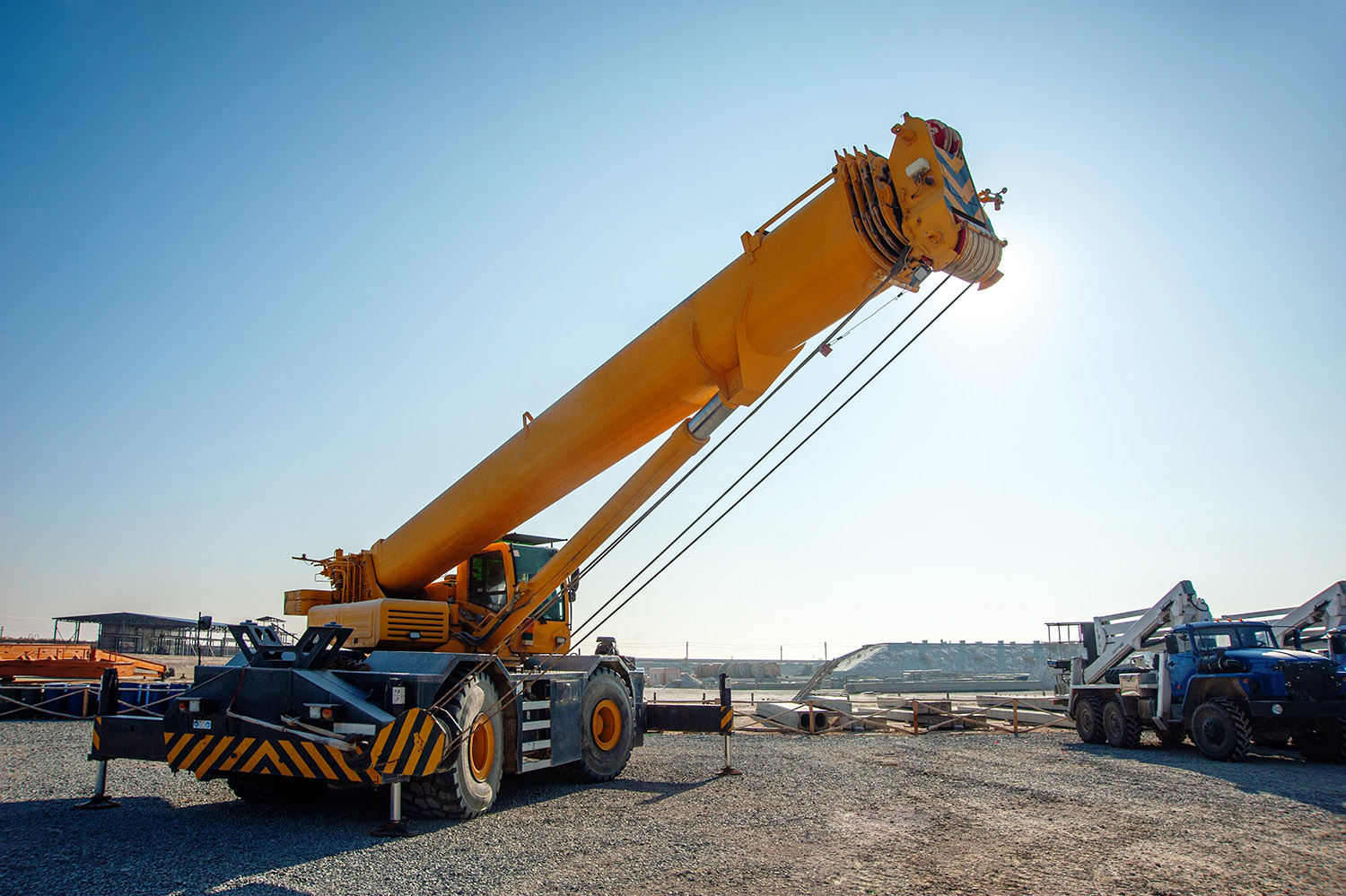
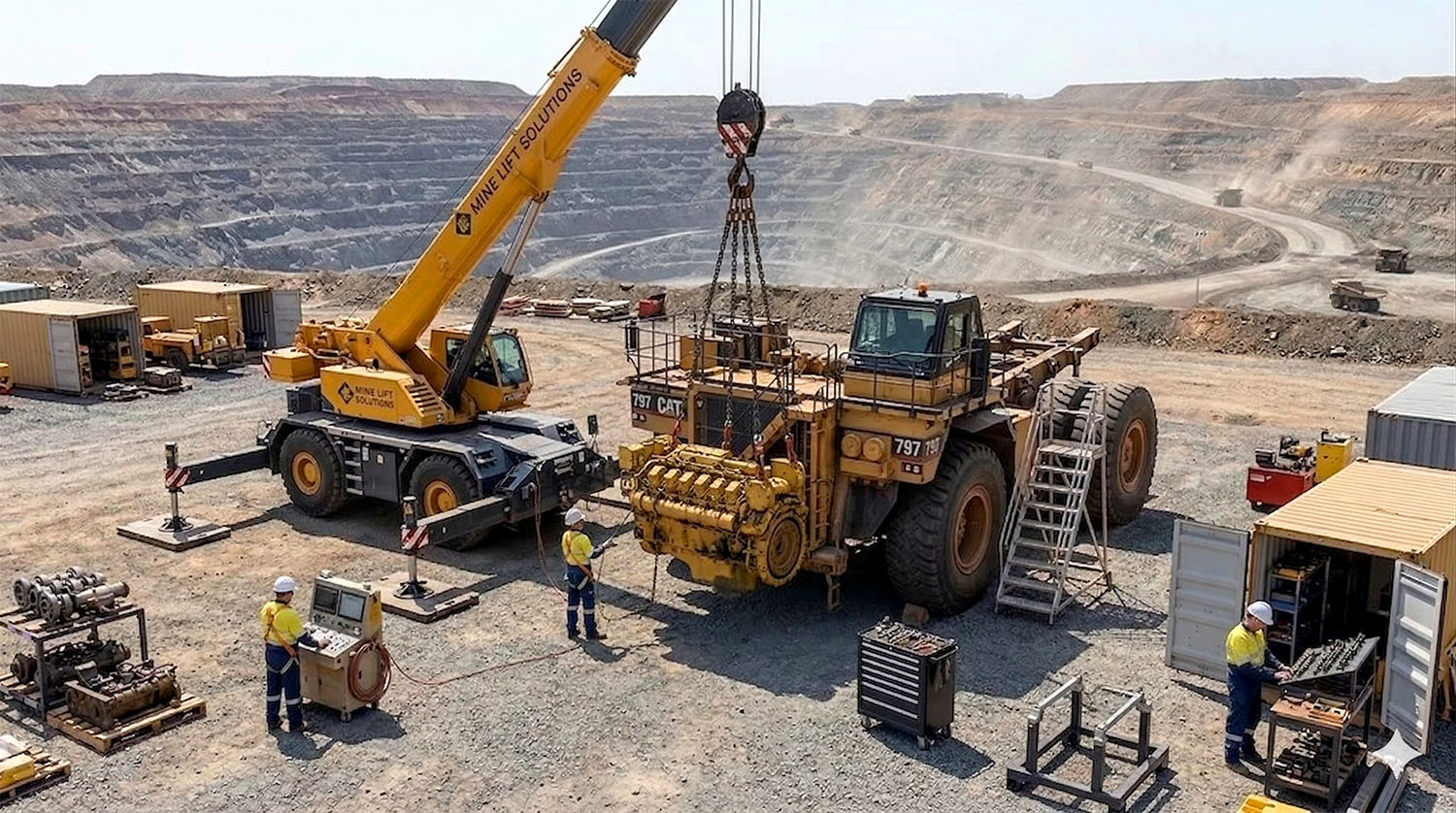
However, when daily maintenance tasks move outside the plant and into the open pit or onto the tailings storage facility, ground stabilisation becomes the primary hazard. Here, the modern Rough Terrain (RT) crane takes over. Engineered with aggressive off-road wheelbases and multi-mode crab steering, RTs are designed to navigate deep mud and steep haul road gradients. Current generation models provide exceptional lifting duties on uneven dirt pads, making them the default choice for servicing disabled 400-tonne haul trucks in the field or conducting valve replacements on remote tailings lines.
Capital Infrastructure: Ground Bearing Pressure and Continuous Lifting
Whether it is developing a greenfield site or executing a brownfield plant expansion, heavy civil construction demands continuous, high-volume lifting. This is the traditional domain of the lattice boom crawler crane. Tracked undercarriages distribute immense machine weights over a massive surface area, mitigating the ground bearing pressure issues associated with soft, early-stage earthworks. Lattice crawlers provide the unparalleled hook heights necessary for erecting towering surge bins or complex steel superstructures.
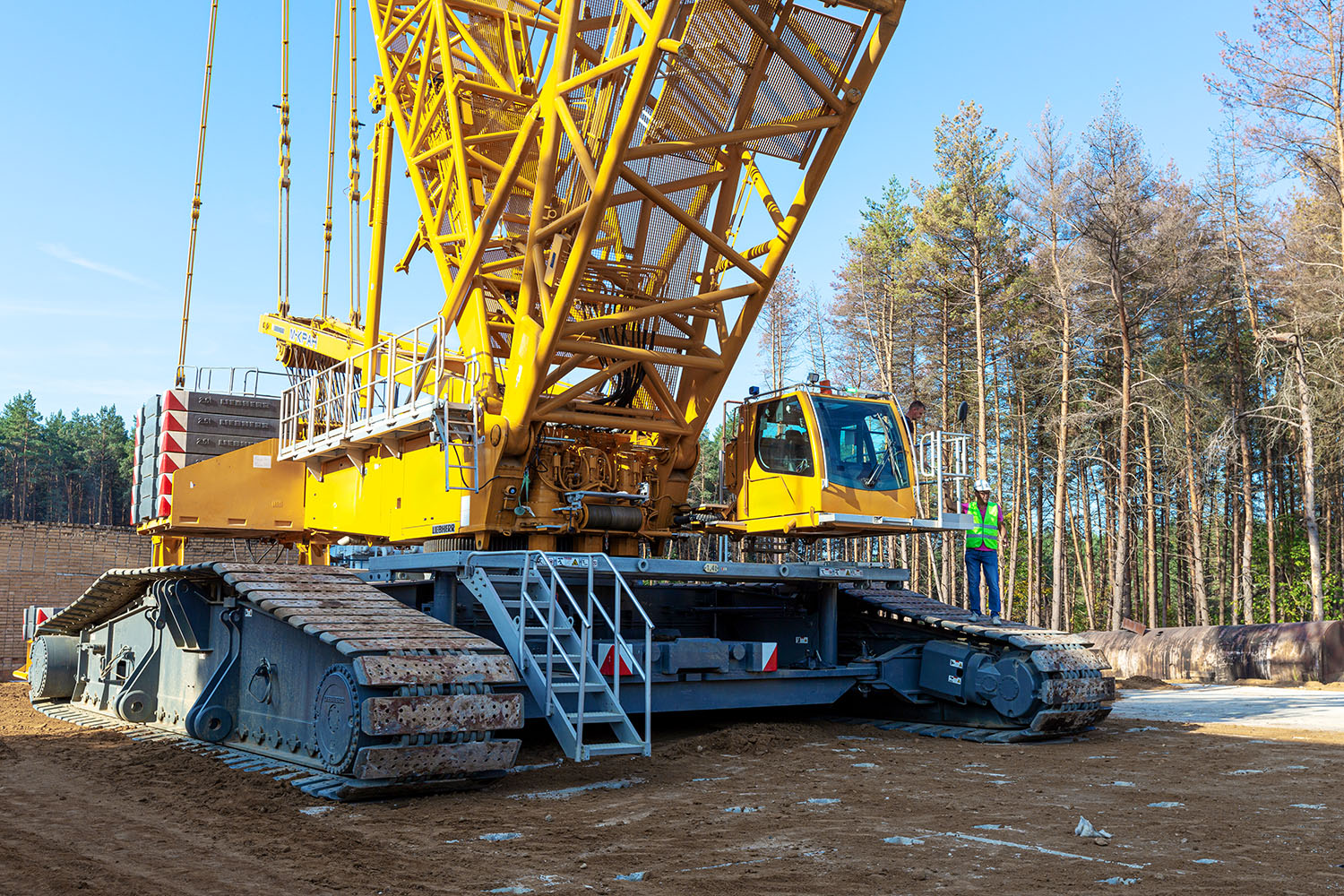
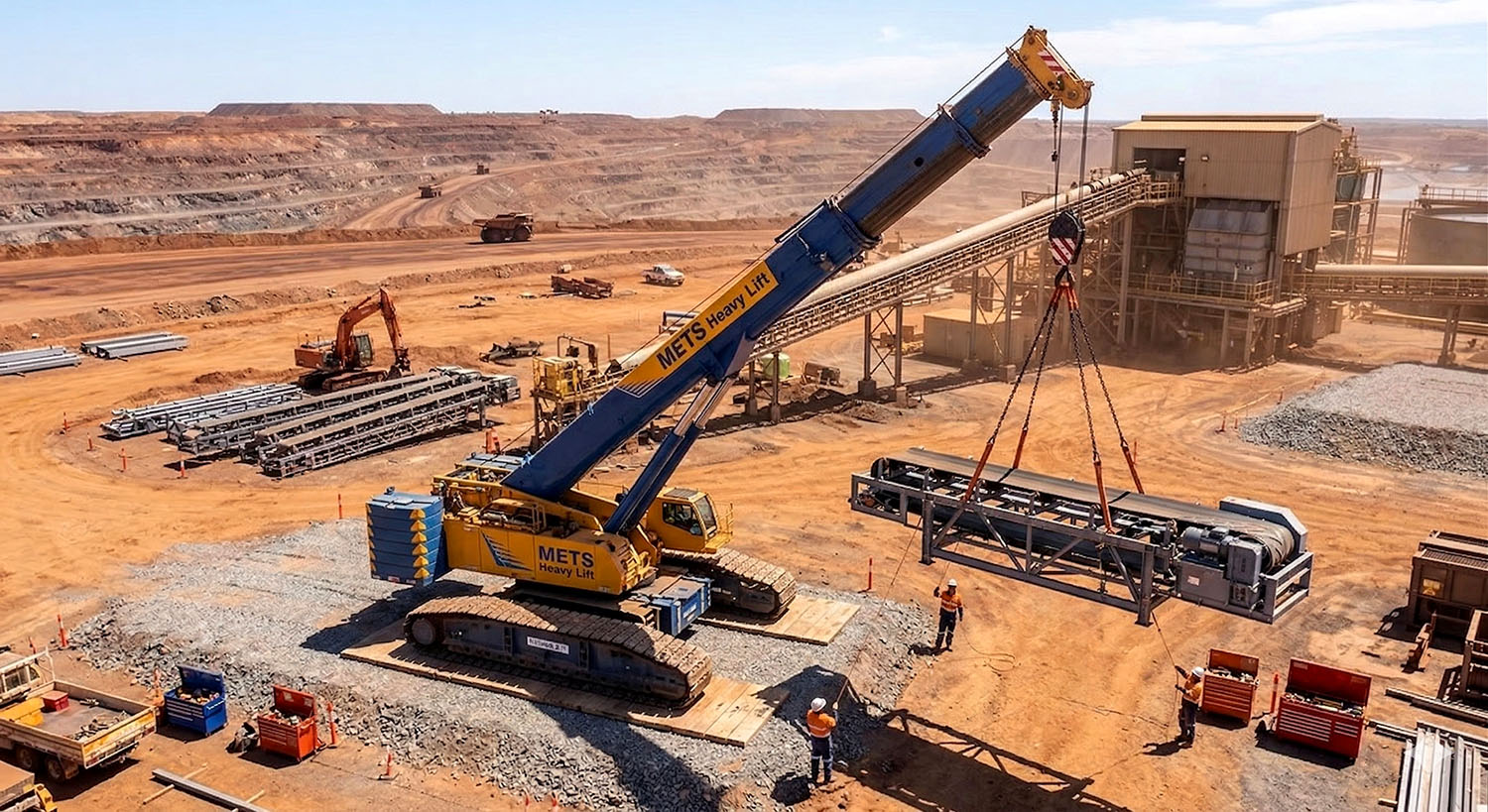
Yet the most significant shift in site construction logistics recently has been the widespread adoption of the Telescopic Crawler (telecrawler). Telecrawlers eliminate the labor-intensive boom assembly required by their lattice counterparts.
Because they can retract their boom, tram to a new location and boom back up in minutes, they are exceptionally efficient for linear infrastructure projects. Laying extended heavy-wall poly pipe or assembling kilometres of overland conveyor modules, is made exponentially faster with a telecrawler, stripping days off the construction critical path.
Shutdowns and Turnarounds: High-Density Lifts in Compressed Timeframes
A major concentrator shutdown can cost a tier-one operator millions of dollars in deferred revenue per day. In this high-stakes environment, raw capacity and rapid mobilisation are the only metrics that matter. All-Terrain (AT) cranes are engineered precisely for these bottleneck events.
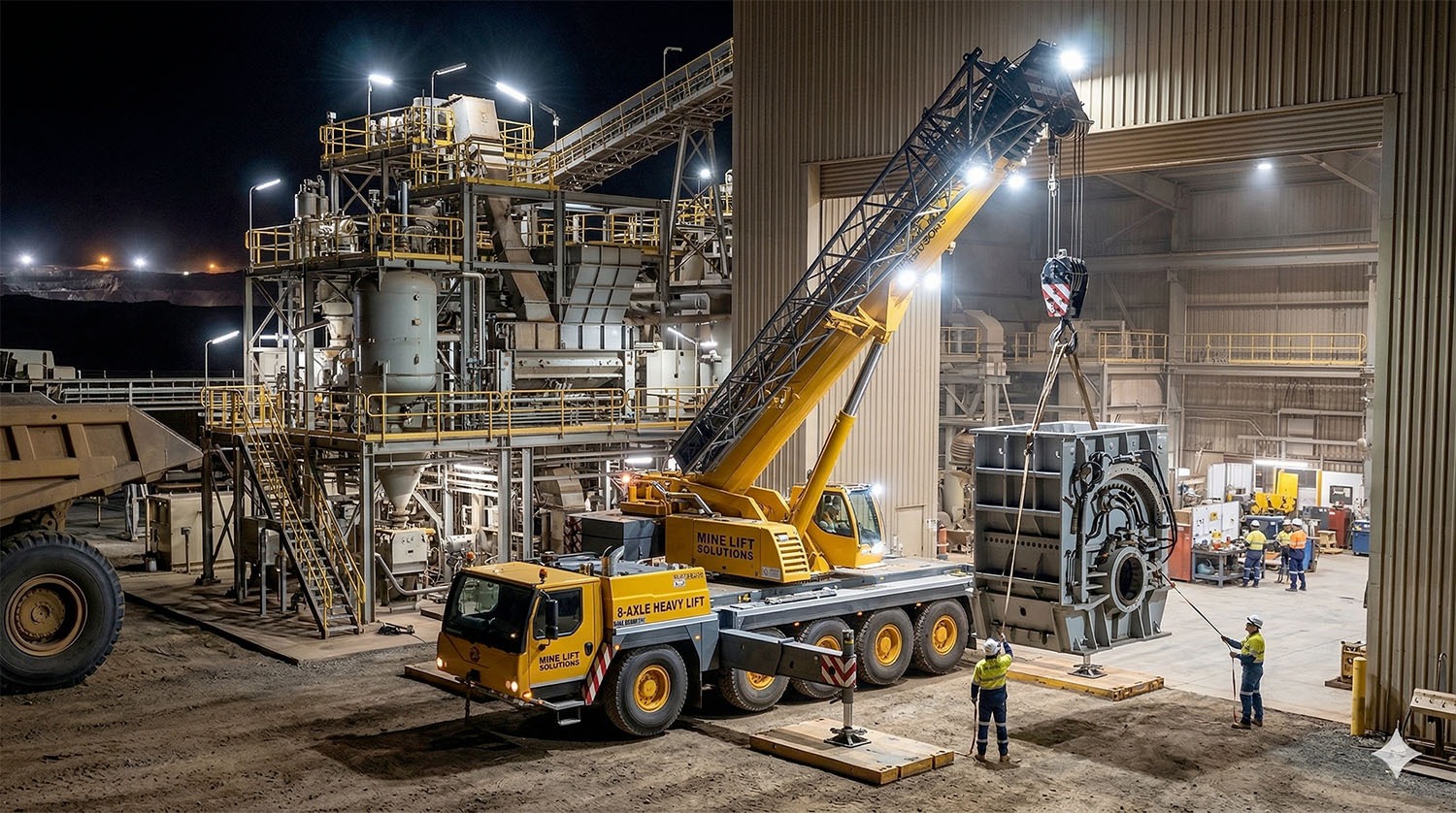
ATs combine highway-speed mobility with the heavy-lifting capabilities historically reserved for crawlers. During a major shutdown a fleet of multi-axle ATs will converge on a site to execute synchronised heavy lifts. Machines in the 400-to-800-tonne class - such as the massive 8-axle Liebherr LTM 1650-8.1 - are routinely mobilised to extract primary crusher mantles or exchange multi-tonne gearboxes.
The critical technological advantage of modern ATs during a shutdown is their variable outrigger positioning systems. Concentrator plants are dense webs of existing structural steel, pipe racks and temporary scaffolding. Modern ATs can deploy their outriggers asymmetrically to squeeze into these chaotic footprints. The crane’s onboard computer then calculates the safe lifting capacity, in real-time, based on the exact extension of each individual outrigger beam, ensuring maximum capacity without compromising the machine's centre of gravity.
The days of making do with whatever crane happens to be parked in the yard are over. Maximising uptime requires a forensic approach to fleet selection. By deploying agile RTs for reactive maintenance, stable telecrawlers for linear construction and high-capacity ATs for time-critical shutdowns, operators can structurally eliminate schedule delays and execute the heaviest lifts with absolute precision.